
STEM Racing Thailand
Engineer
performance.
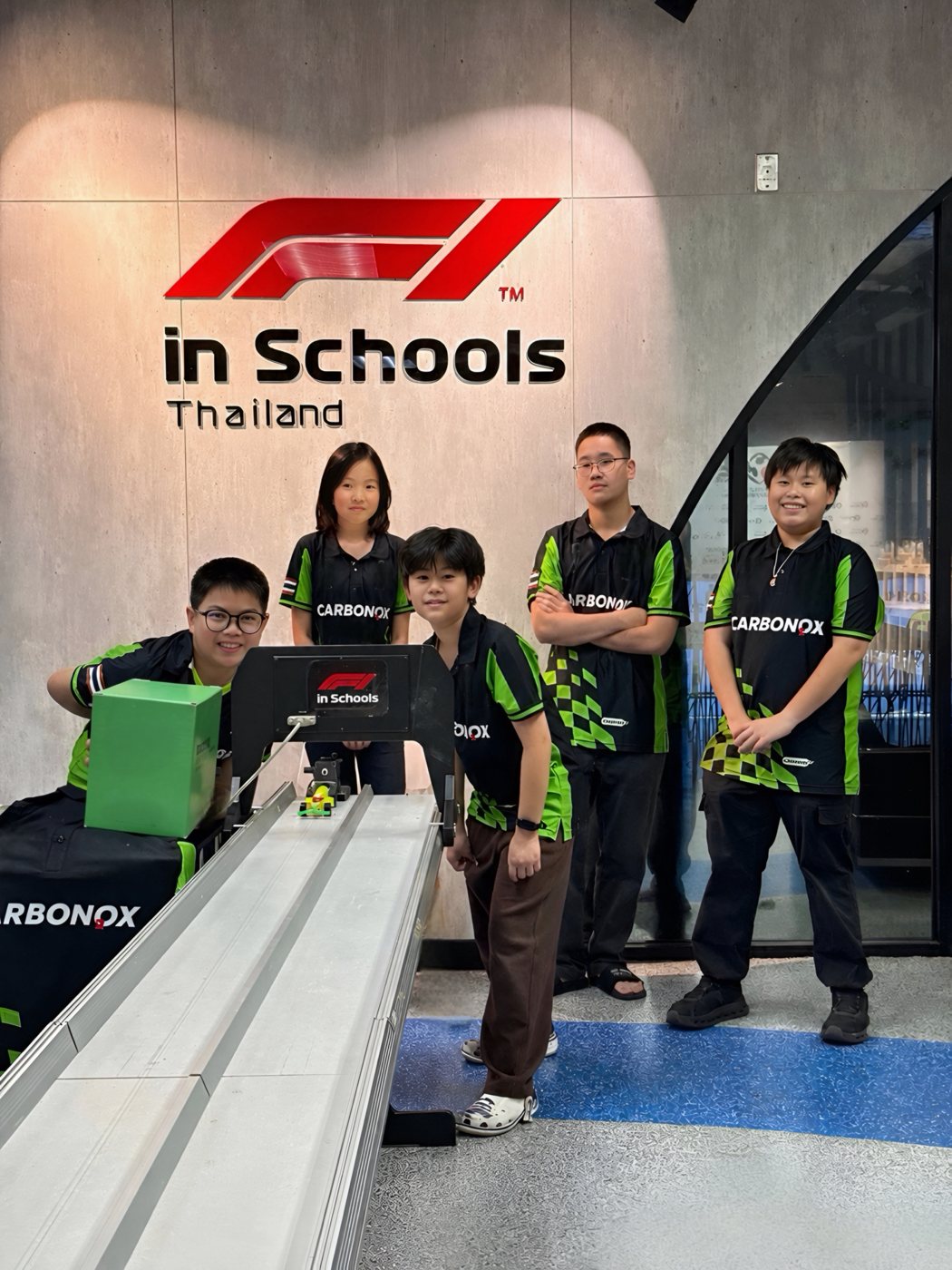
We are CARBONOX, a five-person youth STEM Racing team from Thailand. We design, machine and test CO₂-powered cars, then share the whole journey so more students can start their own.
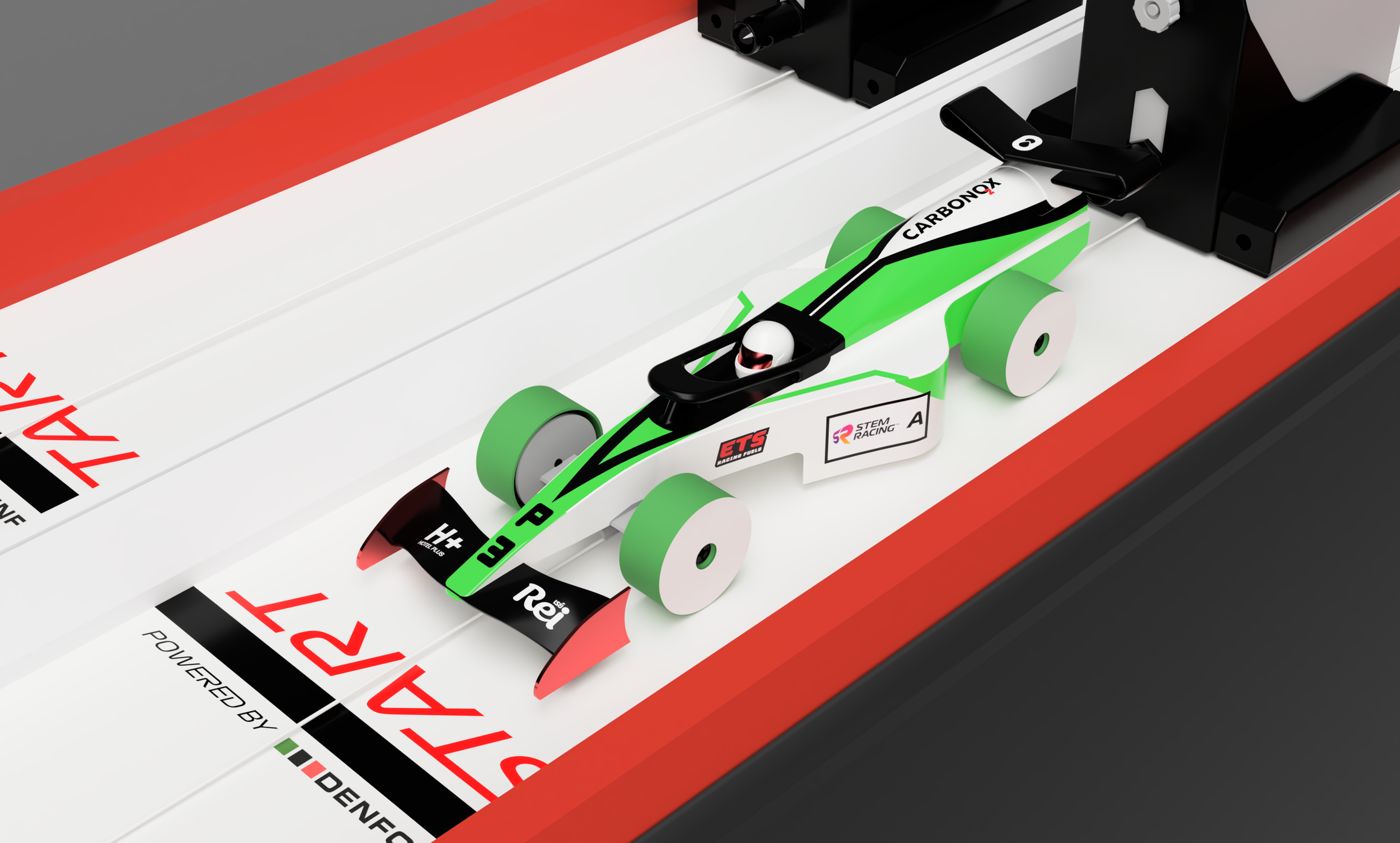
Pit game
Beat the lights
A race starts with a reaction. Tap the gantry to arm it, wait for all five lights, then tap again the moment they go out. Jump the start and you are disqualified.
Engagement
Counting starts once the page connects.
The crew
Five roles.
One car.
Every task has one owner. Engineering, enterprise and project management run as one system, reviewed every Saturday and built together every Sunday.
How we work
The weekly loop
Trello cards carry the owner, deadline and checklist. Anything more than two days late gets a recovery plan and extra hands.
Engagement
Counting starts once the page connects.
Engineering
Redo. Refine.
Run.
Every curve begins in Fusion 360. The critical path is fixed: rules, CAD, simulation, manufacture, testing, final car. Pick a stage.
CBN 007 · Deadline Dasher
Spin the real car
Loaded straight from the team's Fusion design file. Drag to spin it, pull it apart, and tap a numbered tag to see what each part is made of and why it looks the way it does. Race number P3
20 metre run
Watch it in real time
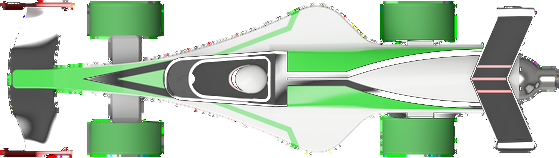
Design concept
A car that wastes nothing
Every STEM Racing car gets the same push from the same CO₂ cartridge, so the only way to win is to waste less of it. Energy leaks out through the air (drag) and through the mechanics (bearings that rub, wheels that wobble, parts that flex). Track testing showed the mechanical losses cost as much as the air, so CARBONOX set six design drivers and judged every idea against them.
Aerodynamics
Drag, measured
ANSYS Fluent was the virtual wind tunnel; a smoke tunnel confirmed the flow on the real body. Every CFD run used the same inlet speed, domain, mesh and inflation layers so variants could be compared fairly.
Drag coefficient
CFD gave a drag force of 0.17 N at 20 m/s. With ρ = 1.2 kg/m³ and a frontal area of 0.0025 m², that works out to Cd ≈ 0.28 ± 0.02 over repeated runs. The chart shows how drag grows with the square of speed; the mean race speed on the 20 m track is about 16.7 m/s.
Where the drag comes from
| Region | What CFD showed | Share |
|---|---|---|
| Wheels | Large wake regions behind all four; form drag plus vortex shedding | Largest |
| Rear wing / tail | Long blue low-velocity zone from the blunt rear and exposed rear wheels | High |
| Sidepods / body | Mostly attached flow; a wake zone at the rear wheel cut-out | Moderate |
| Halo & helmet | Small separation where the canopy meets the body | Moderate |
| Front wing / nose | Small wake; splits the flow and guides it around the front wheels | Low |
The body follows four rules: a low, narrow nose that splits the air cleanly; a cockpit that blends into the body with no steps; a long, gentle taper to the rear axle; and a tidy tail where the wing and nozzle sit in the wake to shrink its low-pressure pull.
Wheel system R&D
Five concepts, one winner
The wheel system is where the design made its biggest gain. Five architectures were built and track-tested. Each was judged on bearing hold, concentricity, survival over repeated runs, and 20 m time.
20 m time by concept
Concept #5 ran 1.09 s, which is 15.5% faster than concept #1. Concept #3 was slower than #2, which proved the bottleneck was the axle, not the bearing seat.
| # | Architecture | Main failure mode or strength | Result |
|---|---|---|---|
| 1 | Axle + outer rubber ring | Ring slips; rubs bearing shield, adds drag and wobble | Rejected |
| 2 | Stepped axle + coated stainless ring | Better axial location; carbon rod out of round (≈0.05 mm) | Rejected |
| 3 | Support + washer + ring | Bearing face stable; axle runout still dominant | Rejected |
| 4 | Support + direct screw | Wobble down ~50%; bosses crack after 3+ runs (hoop stress) | Rejected |
| 5 | Support + RevNut + screw | Brass insert spreads the clamp load; wobble eliminated, repeatable torque | Selected |
Smaller fixes inside the hub: a retaining lip stops the wheel walking off the bearing in cornering, a counterbore gives the screw head clearance, and liquid super glue is banned near bearings because its vapour leaves an abrasive white crust on the balls.
Design inspiration
Borrowed from nature, craft & engineering
The team's rule was not to copy other race cars. Twelve ideas came from places that had already solved a similar problem, and each one ends in a CARBONOX feature you can find on the model above.
Nature
- Kingfisher beaklong, low nose
- Soaring-bird wingtipsfront wing endplates
- Bambootubular wheel-support spool
Craft & architecture
- Origami foldV-shaped rear wing
- Arch bridgerear-wing loop support
- Cotton reelØ26 mm spool flanges
Everyday engineering
- Aircraft airfoilfront-wing section F-F
- Aerospace rivet nutmetal thread inserts
- Bicycle hubretaining lip
- Watch jewel bearingsteel / zirconia bearings
- Spinning top±0.02 mm runout limit
- Archery arrowrear wing behind the CG
Manufacturing
Built to ±0.5 mm
The body is CNC-machined from model block; wings, wheels and supports are FFF-printed on a Bambu Lab printer. The CAD model was never sent straight to the machine: cutter radius, CO₂ fit, workholding and finishing loss were designed in first.
CNC alignment fix
The first machined body failed on the CO₂ chamber and body height. After recalibrating X/Y/Z and re-aligning the WCS to the CAD centreline, every critical dimension passed.
| Measurement | CAD | Before | After |
|---|---|---|---|
| CO₂ chamber, left | 4.25 | 2.38 −1.87 | 4.20 −0.05 |
| CO₂ chamber, right | 4.25 | 4.32 +0.07 | 4.20 −0.05 |
| Body width | 64.00 | 63.90 −0.10 | 63.80 −0.20 |
| Body height, left | 15.00 | 13.30 −1.70 | 14.80 −0.20 |
| Body height, right | 15.00 | 14.20 −0.80 | 14.50 −0.50 |
Values in mm. CO₂ left/right variation 1.94 → 0.00 mm.
Mass budget
Lighter means faster off the line (a = F/m), so every part was weighed into a mass-control sheet. Paint and lacquer were tracked layer by layer: two primer coats, partial CA, paint and two lacquer coats added 2.3 g.
| Part | Walls | Infill | Goal |
|---|---|---|---|
| Wheels, wheel supports | 2 | 1% | Strength around the axle interface |
| Nose, front wing, halo, helmet | 1 | 1% | Low mass |
| Rear wing | 1 | 0% | Minimum mass |
Testing
From 1.8 s to 1.045 s
Every prototype ran 3 to 5 times on the official 20 m track with Mosa and Denford cartridges at the Knowledge Exchange Center, with video analysis to separate car problems from launch problems.
Track times by phase
Each phase took time off: 1.178 s in Phase 4, 1.105 s in Phase 5, and 1.045 s for the CBN 007 race car, the team record.
Root-cause log
| Problem | Verified cause | Fix |
|---|---|---|
| Wheel wobble | Out-of-round axle, OD/ID mismatch | CNC axle, dial-gauge runout check |
| Front-left wheel lifted 1.2 mm | Support not seated | Flatness checks, inspection jig |
| Hub overhang sagging | Heat build-up in 20-part print batches | Max 4 wheels per plate |
| Bearing chatter | CA glue vapour blooming | Liquid CA banned near hubs |
| Wheel camber under load | Thin flat support, low stiffness | Curved plate with R-fillets |
| Wheel detached at speed | No axial stop on outer ring | Hub retaining lip |
| Spin-down under 30 s | Screw head rubbing hub | Enlarged counterbore |
Process
Eight steps, every cycle
Each loop measured drag and track time, then fed the result back into the CAD.
- Research
- Sketching (50+ concepts)
- CAD in Fusion 360
- CFD simulation
- CNC + 3D-print prototype
- Wind tunnel
- Refine canopy, sidepods, rear
- Compliance check
“Several of our obvious fixes made things worse. What kept finding the real causes was a set of simple, repeatable tests with criteria decided in advance.”
Next on the list: DLC or PTFE thin-film coatings on the axle, a refined rear taper to shrink the wake, and better-integrated wheel aerodynamics.
Race the car →Engagement
Counting starts once the page connects.
Mini game · 20 m drag race
CARBONOX Launch
Build a setup from the team's own R&D options, then race it against the car's earlier test phases. Wait for the lights to go out and hit launch. A real physics model runs the race: CO₂ thrust, aerodynamic drag and wheel losses.
Engagement
Counting starts once the page connects.
Identity
Car. CO₂.
Caring.
The name CARBONOX comes from six ideas. Tap one to see what it stands for.
Palette
Four colours
Neon green for energy, Carbonox green for sustainability, lava red for racing spirit. Tap a swatch to copy its hex.
Key elements
Shapes of speed
From the CO₂ cartridge in the logo.
Speed lines for velocity and energy.
Smooth curves drawn from airflow.
Direction and forward movement.
Worn & carried
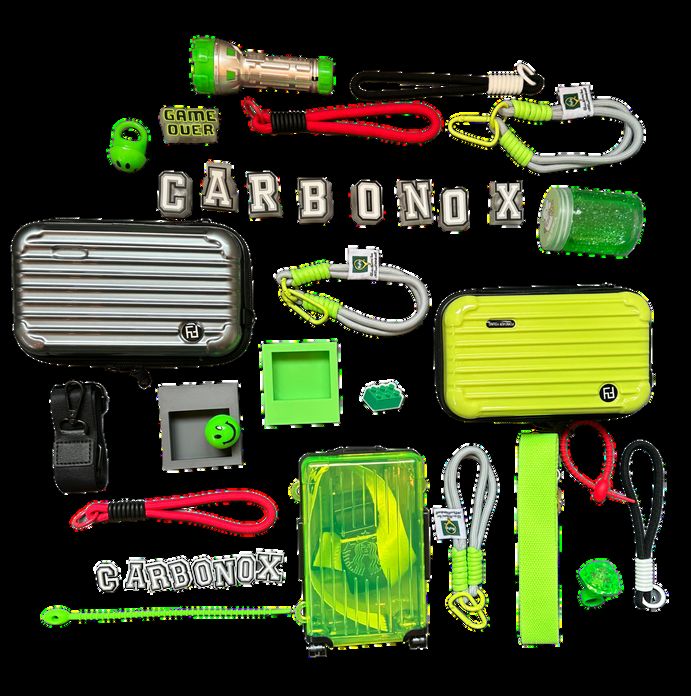
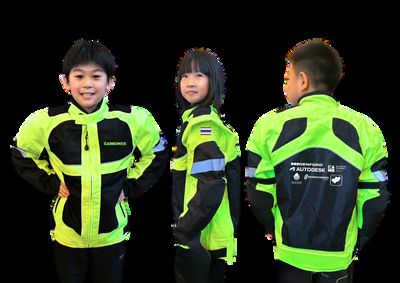
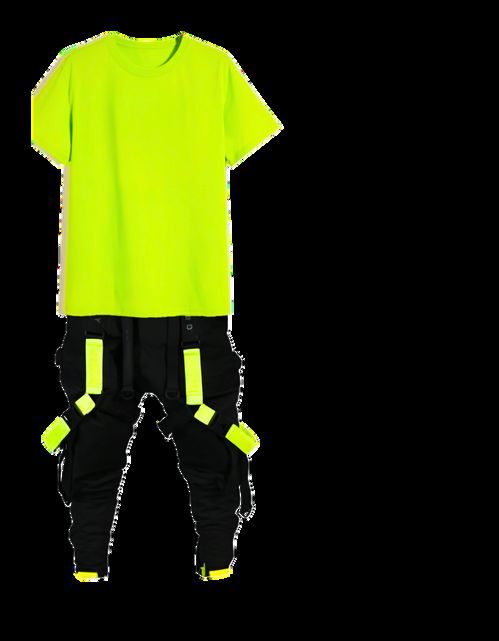
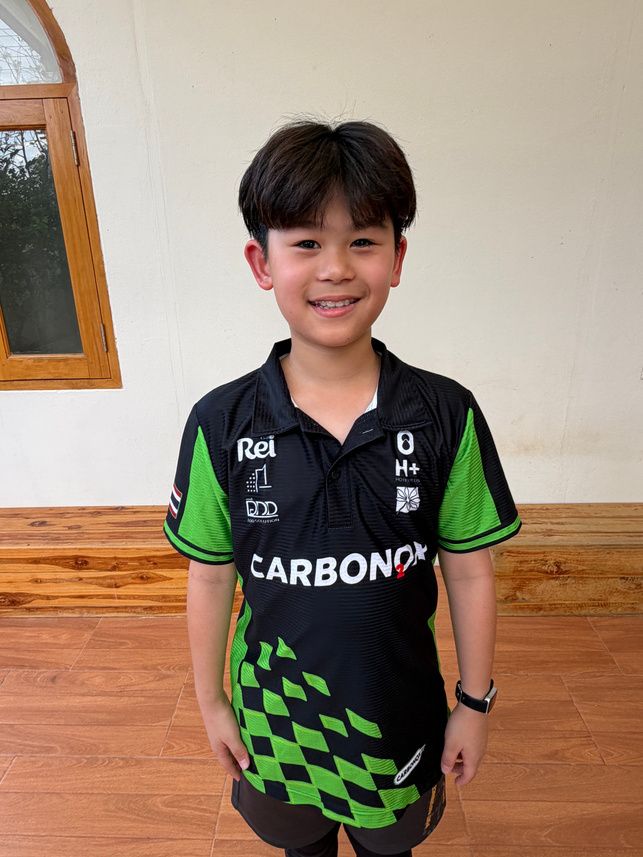
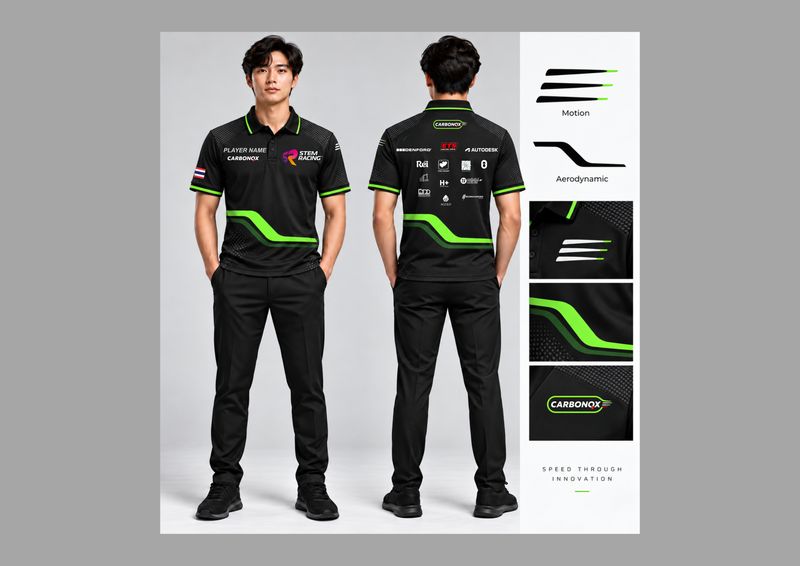
Merch & kit
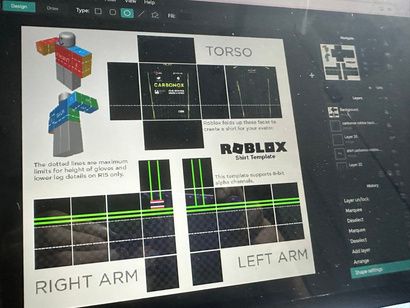
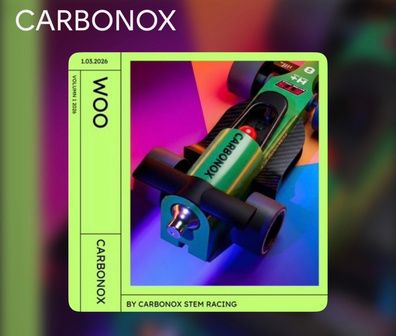
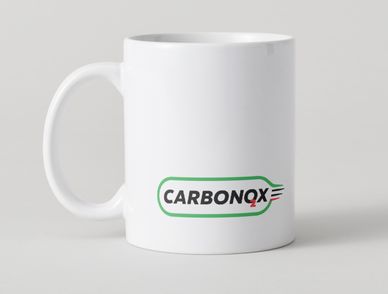
Engagement
Counting starts once the page connects.
Sponsorship
Race with
us.
Four financial tiers built around our 90,000 THB competition budget, plus a technical tier for partners who give knowledge, machines or materials. Choose a tier to see what it includes.
Return so far
What partners got
Thank you
Our partners
Back the next run
Ask for the sponsorship prospectus. Partners get monthly progress updates and an ROI report after the season.
www.carbonoxf1.comCARBONOXF1 Engagement
Counting starts once the page connects.
CARBONOX CARE
Not just a car.
Our cars are about caring.
Every tested car, merch sale and engineering skill gets a second purpose. Here is where it went.
Sustainability
Waste into value
Tap a card to see what each kind of racing waste becomes.
Engagement
Counting starts once the page connects.